Dubai is a global destination for property investors looking for strong capital appreciation and regular rental returns. Expanding a property collection across high-demand districts requires structured financial planning, operational oversight, and proactive strategic positioning. The professional real estate asset management converts a passive holding into an active financial tool which generates stable long-term profits.
Property asset management aims at elevating the total value of the investment, while minimizing the risk related to the fluctuating nature of the market. When investors collaborate with market experts, these ones offer investors an insight into the deep-level market movements, smooth functioning, etc. and create personalized roadmaps for growth in line with the characteristics of the UAE market.
Core Pillars of Real Estate Asset Management in Dubai
The key to real estate asset success is a multi-dimensional real estate strategy that goes far beyond typical daily property maintenance. The asset managers mainly concentrate on the overall portfolio health, risk spread, and capital allocation plans. Structured real estate portfolio management includes the alignment of each unit with the investor’s financial goals in the broader sense.
- Capital Growth Positioning: Identifying emerging master-planned communities and high-yield locations across Dubai to maximize long-term equity growth.
- Cash Flow Optimisation: Implementing continuous rental analysis to maintain competitive yields while preserving high occupancy rates across all holdings.
- Risk Mitigation: Balancing investments between completed secondary properties and high-potential off-plan developments to cushion against market shifts.
Institutional Capital Allocation and Risk-Adjusted Portfolio Models
Scaling a real estate portfolio across Dubai’s prime master-planned developments requires disciplined capital deployment frameworks. Institutional property investment management goes beyond simple property acquisition, utilizing risk-adjusted return models to optimize capital distribution across distinct asset classes.
Key capital allocation strategies deployed in professional real estate portfolio management include:
- Core Assets for Income Stability: Allocating capital toward fully leased residential units in established waterfront hubs like Dubai Marina and Downtown Dubai to guarantee predictable baseline cash flow.
- Value-Add Properties for Capital Growth: Target properties in high-demand residential sectors requiring cosmetic modernization or floor plan reconfigurations to capture rapid equity appreciation.
- Opportunistic Off-Plan Allocations: Securing early-stage off-plan allocations from tier-1 master developers to leverage flexible payment plans and capture pre-handover price appreciation.
- Weighted Average Unexpired Lease Term (WAULT) Management: Balancing short-term holiday home leases with multi-year commercial or residential tenancies to maintain liquidity while hedging against market cycles.
Applying institutional capital allocation models protects equity while systematically increasing total portfolio performance over multi-year holding periods.
Revenue Enhancement and Yield Optimisation
Identifying lease structures, pricing methods and tenant retention strategies through a data-driven investigation are essential to maximise overall net income. Property investment management should take a strategic approach and include regular market benchmarking to ensure renting pricing is aligned with current demand trends. Improving interior space, installing smart tech, and ensuring high maintenance standards are among the real estate asset management aspects that allow owners to get a premium rate rent, in areas like Downtown Dubai and Dubai Marina.
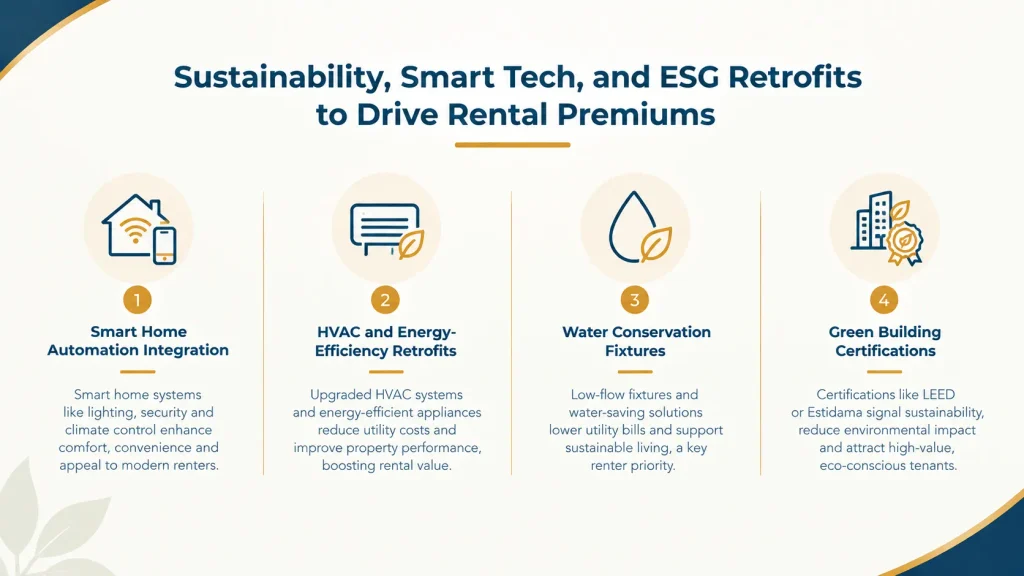
Sustainability, Smart Tech, and ESG Retrofits to Drive Rental Premiums
In Dubai’s evolving luxury market, tenant preferences heavily favor modern, energy-efficient, and technology-enabled residences. Integrating Environmental, Social, and Governance (ESG) considerations into property asset management directly translates into higher tenant retention and increased rental yields.
Targeted capital retrofit strategies implemented by property investment management specialists include:
- Smart Home Automation Integration: Upgrading units with smart thermostats, keyless digital locks, and automated lighting systems that appeal to high-earning corporate expats.
- HVAC and Energy-Efficiency Retrofits: Installing high-efficiency air conditioning systems and LED lighting arrays to reduce DEWA utility consumption, lowering operational costs for occupants.
- Water Conservation Fixtures: Equipping luxury bathrooms and kitchens with aerated fixtures and smart water monitoring devices to minimize environmental impact and utility overhead.
- Green Building Certifications: Aligning major villa and commercial refurbishments with regional sustainability benchmarks, commanding premium rates from eco-conscious international tenants.
Future-proofing real estate assets through strategic technological and green retrofits safeguards property values and drives sustained outperformance against competing market inventory.
Financial Risk Control and Asset Preservation
Securing and safeguarding a financial investment is perhaps the most important role in real estate asset management. Detailed property checks regularly verify operating expenditures, insurance maintenance budgets and the compliance with local laws and regulations. By effectively managing running costs to a minimum while still maintaining property standard level it results in the preservation of cash flows. Besides that, it also helps long term property price growth at a stable pace.
Strategic Portfolio Diversification in the UAE Market
Diversification across asset types remains essential for long-term financial stability. Combining residential apartments, luxury waterfront villas, and commercial real estate spreads exposure across multiple tenant demographics. Balancing income-generating ready units with strategic off-plan allocations creates a healthy blend of immediate liquidity and future equity expansion.
Off-Plan Capital Appreciation Strategies and Developer Payment Plan Optimization
Incorporating off-plan developments into real estate asset management allows investors to build substantial equity without deploying 100% capital upfront. Navigating off-plan acquisition requires strict compliance checks and developer performance evaluations to manage completion risk effectively.
Strategic off-plan portfolio management protocols include:
- Developer Escrow Account Verification: Ensuring all project funds are deposited in DLD-regulated escrow accounts governed by Law No. 8 of 2007, releasing capital strictly based on certified construction milestones.
- Post-Handover Payment Plan Calculations: Structuring acquisitions around post-handover payment schedules where rental income generated after handover subsidizes remaining developer installments.
- Oqood Pre-Registration Management: Registering interim property deeds via DLD’s Oqood system immediately upon booking to establish clear legal title before handover.
- Pre-Handover Assignment and Resale Timings: Identifying peak exit windows to assign off-plan contracts prior to completion, maximizing return on equity (ROE) for growth-focused investors.
Expert off-plan portfolio management ensures investors capitalize on Dubai’s infrastructure expansion while mitigating developer delivery risks.
Strategic Advantages of Real Estate Portfolio Management
Enlisting dedicated experts in real estate portfolio management offers significant advantages over self-managed property holdings. As portfolios grow, personal oversight becomes increasingly complex and time-consuming. Professional managers apply institutional discipline to scale operations smoothly while improving overall investment performance.
Long-Term Value Creation Through Capital Upgrades
Over time, physical assets require targeted capital improvements to remain competitive in Dubai’s evolving luxury market. Professional property asset management identifies high-ROI renovation opportunities, such as kitchen modernisations, bathroom refurbishments, or energy-efficiency retrofits. These targeted upgrades increase capital valuations and allow owners to attract reliable, high-tier tenants.
Automated Operations and Tenant Management
Managing tenant relationships, lease registrations, maintenance requests, and dispute resolutions requires constant operational support. Full-service property investment management streamlines these administrative workflows. Structured lease management reduces costly vacancy periods and supports predictable, hands-off income for property owners.
Corporate Tax, Accounting Standards, and Asset Structuring
Navigating the financial architecture of real estate portfolio management in Dubai requires aligning asset ownership with corporate governance rules and federal tax laws. Understanding corporate tax implications ensures property portfolios remain structured for tax efficiency and legal compliance.
Essential fiscal management aspects for real estate portfolios include:
- UAE Corporate Tax Compliance Evaluation: Structuring personal real estate holdings versus commercial corporate entities to ensure maximum benefit from personal investment tax exemptions.
- Mollak Service Fee Audit Inspections: Auditing building service charge invoices generated through DLD’s Mollak system to ensure service fees reflect actual building operational expenses.
- Segregated Escrow and Client Account Audits: Utilizing audited bank accounts for client rental distributions, security deposits, and maintenance funds in compliance with RERA standards.
- Cross-Border FX and Wealth Transfer Optimization: Facilitating seamless international rental income transfers and currency conversions for overseas investors through institutional banking channels.
Establishing rigorous financial and accounting controls guarantees that high-value real estate portfolios operate smoothly under UAE financial regulations.
Selecting Strategic Partners for Property Investment Management
Partnering with an established firm in Dubai ensures that your real estate assets receive localized expertise and proactive strategic guidance. Local advisers bring deep insight into Dubai Real Estate Regulatory Authority (RERA) frameworks, master developer guidelines, and shifting buyer preferences.
Institutional Insights and Transparent Reporting
Leading asset management firms prioritize clear communication and operational transparency. Investors benefit from regular financial reporting, transparent service charge accounting, and real-time access to portfolio performance metrics. Clear metrics allow owners to make informed decisions regarding asset acquisitions, holdings, or strategic dispositions.
Strategic Exit Strategies: Refinancing, Divestment, and Capital Recycling
A critical yet frequently overlooked component of real estate asset management is executing timely asset dispositions or capital recycling maneuvers. Holding an underperforming asset indefinitely can drag down overall portfolio yields and tie up valuable equity that could be deployed into higher-yielding opportunities.
Strategic portfolio exit and refinancing protocols include:
- Data-Driven Portfolio Health Audits: Conducting annual reviews of every property’s net rental yield, capital growth rate, and upcoming maintenance liabilities to flag underperforming units.
- Equity Release and Property Refinancing: Partnering with licensed UAE financial institutions to extract accumulated equity from appreciated ready properties to fund new acquisitions.
- Strategic Divestment Timing: Timing asset sales to coincide with peak neighborhood demand cycles or infrastructure completions (e.g., new Metro line extensions or community retail openings).
- Tax-Efficient Capital Reinvestment: Reallocating liquid capital from sold assets directly into prime off-plan or high-yield commercial real estate to accelerate compound portfolio growth.
Executing well-timed exit and reinvestment strategies ensures your property portfolio remains dynamic, liquid, and continuously optimized for maximum total return.
Custom Solutions with Regent Elite Properties
Regent Elite Properties delivers personalized advisory services designed to optimize high-value real estate portfolios across the UAE. By combining granular local market data with broad strategic foresight, Regent Elite Properties helps investors refine their holding strategies, identify high-yield opportunities and streamline portfolio performance.
Through customized property investment management, Regent Elite Properties structures custom growth roadmaps for international private clients, institutional investors, and family offices. Their end-to-end guidance spans off-plan advisory, secondary market acquisitions, and income-focused property management, ensuring every asset delivers strong risk-adjusted returns.
Action Plan for Optimising Your Real Estate Portfolio Growth
Ready to maximize your returns and scale your real estate portfolio in Dubai? Partner with Regent Elite Properties to transform your properties into a professionally managed, high-performing asset collection.
Contact our senior advisory team today to schedule a confidential portfolio audit and custom management evaluation.
Conclusion
Mastering real estate asset management is fundamental to expanding and protecting property wealth within Dubai’s dynamic real estate environment. Strategic real estate portfolio management blends data-driven acquisition choices, proactive yield enhancement, structured risk controls, and continuous property maintenance. Aligning your goals with a trusted advisory firm like Regent Elite Properties provides the expertise, operational scale, and market clarity required to achieve sustainable, long-term portfolio growth.
Frequently Asked Questions
Evaluating an asset manager requires checking local market experience, regulatory compliance, track record, transparent reporting systems and comprehensive real estate portfolio management tools.
Yes, all real estate companies operate under Dubai Real Estate Regulatory Authority (RERA) guidelines, ensuring strict legal compliance, tenant contract protection, and secure escrow account management.
Asset managers optimize rental yields through dynamic market pricing, targeted property refurbishments, proactive lease renewals, and minimizing unlet periods across all holdings.
Property management focuses on daily operational tasks like maintenance and rent collection. Real estate asset management drives overall financial strategy, equity growth, and portfolio expansion.
A balanced portfolio combines high-yield residential apartments, luxury villas, commercial assets, and a mix of ready income-generating units with strategic off-plan developments.
Yes, strategic property asset management upgrades improve physical quality, increase market valuations, boost tenant retention, and allow owners to command top-tier rental rates.