
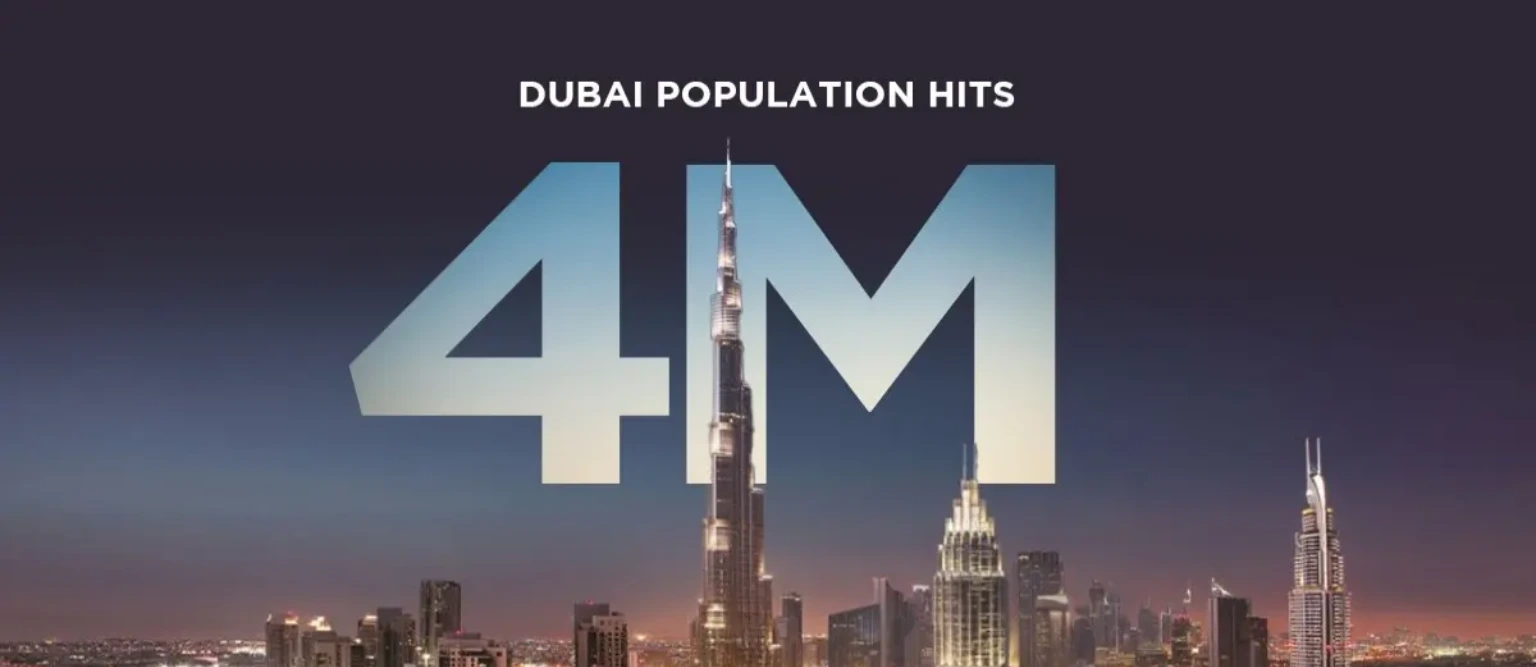
Dubai has officially reached a remarkable milestone: a population of 4 million residents. This growth reflects not only the city’s global appeal but also the success of its economic, cultural, and urban development strategies. Over the past two decades, Dubai has transformed from a regional hub into a cosmopolitan metropolis that continues to attract professionals, families, and investors from around the world.
In this blog, we explore the significance of Dubai’s population surge, its implications for urban planning, infrastructure, the real estate market, and what it means for residents and investors alike.
The Milestone: 4 Million Residents—Dubai’s Population
According to the Dubai Statistics Centre, the emirate’s population stood at 4,000,387 as of August 28. This growth is the result of decades of rapid economic development, a strong business environment, and a lifestyle offering that appeals to both expatriates and Emirati citizens.
Dubai’s population has doubled in just 15 years, highlighting the emirate’s ability to attract talent and investment. Projections indicate that by 2040, the city could be home to 5.8 million residents, presenting both opportunities and challenges for urban planners, developers, and city officials.
What’s Driving Population Growth in Dubai?
Several factors contribute to Dubai’s population growth:
- Economic Opportunities: Dubai is a global business hub with thriving sectors such as finance, real estate, tourism, logistics, and technology. The city attracts skilled professionals seeking career advancement and competitive salaries.
- Lifestyle and Infrastructure: Dubai offers world-class amenities, luxury residential communities, and entertainment options. High-quality healthcare, education, and transport infrastructure make the city appealing to families and expatriates.
- Business-Friendly Policies: Initiatives like long-term residency visas, 100% foreign ownership of businesses, and tax-free income policies enhance Dubai’s attractiveness as a relocation destination.
- Tourism and International Appeal: The city continues to host global events like Expo 2020, international sports tournaments, and cultural festivals, drawing new residents and investors.
Urban Expansion and Infrastructure Development
Dubai’s population growth has significant implications for its urban landscape. Historically, the city has followed a low-density, expansive development model, similar to North American cities such as Miami or Los Angeles, characterized by wide avenues, multi-lane highways, and sprawling residential communities.
However, with a growing population and the Dubai 2040 Urban Master Plan, the focus is shifting towards densification and sustainable urban mobility. Key strategies include:
- The 20-Minute City Concept: Ensuring that 55% of residents live within 800 meters of a mass transit station, allowing daily needs to be met within a 20-minute walk, bike ride, or public transport trip.
- Super Block Project: Creating car-free zones in districts like Al Karama, Al Fahidi, Abu Hail, and Al Quoz Creative Zone to promote walking, cycling, and e-scooters.
- Dubai Walk Initiative: Establishing 3,300 km of walkways, including 124 km of green walkways, enhancing pedestrian infrastructure.
These initiatives aim to reduce dependency on cars, promote sustainability, and enhance urban livability as the population grows.
Transportation Upgrades to Match Dubai’s Population
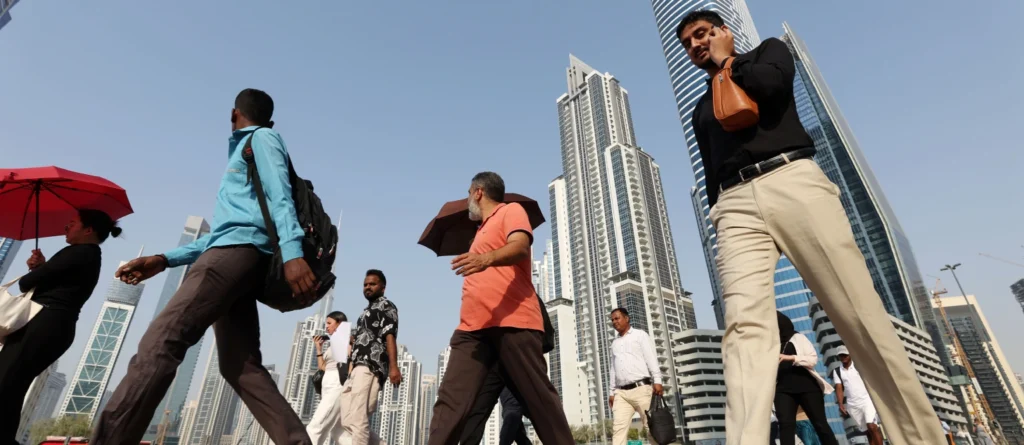
With more residents, Dubai’s transport network is undergoing massive upgrades. Key projects include:
- Blue Line Metro (expected 2029): Expanding the metro network to support dense urban neighborhoods and reduce reliance on private vehicles.
- Bus and Road Network Enhancements: The Roads and Transport Authority (RTA) continues to upgrade bus services and roadways to reduce congestion.
- Dynamic Salik Toll System: Dubai’s electronic toll system is evolving to encourage off-peak travel, reduce traffic jams, and manage urban mobility effectively.
Experts suggest that these upgrades, combined with densification efforts, will make Dubai more pedestrian-friendly, sustainable, and efficient.
Implications for Real Estate and Property Investment
Dubai’s population growth has a direct impact on the real estate market, influencing both demand and pricing.
Residential Demand
- Apartments and Villas: Growing demand for residential units, particularly in well-planned communities with access to transport, schools, and lifestyle amenities.
- Luxury Market: High-net-worth individuals continue to invest in premium villas, waterfront properties, and gated communities.
- Affordable Housing: Mid-range apartments are seeing rising demand as families and young professionals relocate to Dubai.
Rental Market
- Increasing population drives demand for rental properties, providing attractive yields for investors.
- Communities near metro stations and major highways are particularly in demand due to convenient access to work and leisure.
Future Investment Opportunities
- Areas aligned with the Dubai 2040 Urban Master Plan are expected to see significant value appreciation.
- Properties in walkable, mixed-use communities with access to public transport and amenities are becoming increasingly attractive for long-term investment.
Challenges and Solutions
With rapid growth, Dubai faces certain challenges:
- Traffic Congestion: Despite road expansions, high car dependency may lead to congestion. Solutions include enhanced public transport and urban densification.
- Urban Sprawl: As the city grows 50+ km from one end to another, planners focus on densifying neighborhoods to maintain livability and reduce excessive travel times.
- Sustainable Development: The city aims to balance expansion with environmental sustainability, creating green corridors, walkways, and community-focused urban designs.
Experts emphasize that continued infrastructure investment, public transport integration, and smart city planning will help Dubai manage its growth effectively.
The Future: Dubai 2040 and Beyond
The city is preparing for a population of 5.8 million by 2040, with a focus on:
- Integrated Public Transport: Expanding metro, bus, and tram networks to connect neighborhoods efficiently.
- Walkable Communities: Promoting “soft mobility” to reduce reliance on cars.
- High-Quality Urban Design: Prioritizing community-centric neighborhoods with parks, retail, schools, and healthcare within walking distance.
These initiatives aim to ensure that Dubai remains one of the top cities in the world to live, work, and invest in, even as its population grows.
Conclusion: A City Poised for Growth
Dubai’s achievement of 4 million residents is more than a statistic; it reflects the city’s global appeal, economic strength, and urban vision. As the emirate continues to expand, residents and investors alike can expect enhanced infrastructure, smarter urban planning, and dynamic real estate opportunities.
For property buyers, this population milestone signals strong rental demand, future capital appreciation, and access to world-class communities. Whether you’re looking for a luxury villa, a family apartment, or a prime investment property, Dubai’s growth story offers exciting opportunities.
At Regent Elite Properties, we guide you through the Dubai real estate market, helping you capitalize on the city’s growth while securing the ideal property for your lifestyle and investment goals.


