
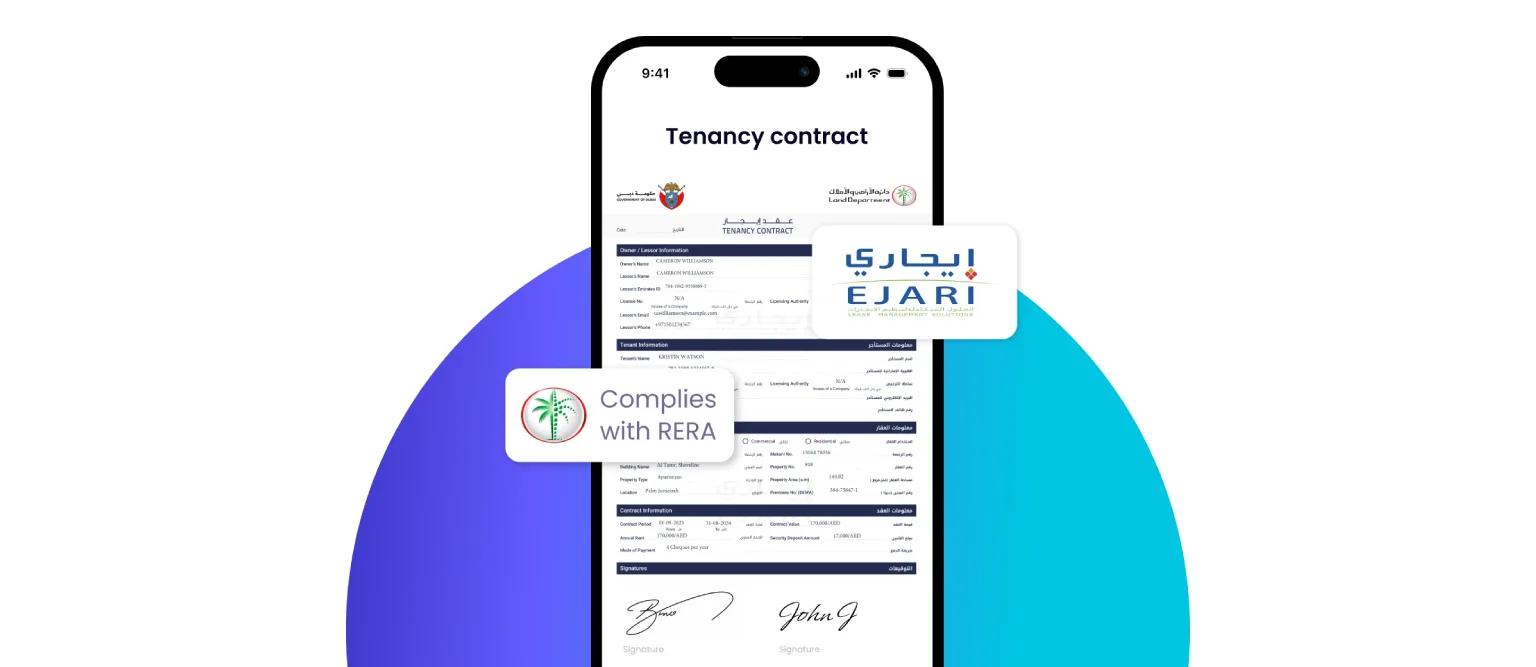
Renewing your tenancy contract in Dubai doesn’t have to feel like decoding a legal document. Whether you’re a tenant planning to stay another year or a landlord reviewing your property lease, knowing the renewal rules can save you stress and money.
This updated 2025 guide breaks down Dubai tenancy contract renewal rules, notice periods, rent increase laws, Ejari registration, and real-world tips to make the process smooth for both sides.
1. The Basics: How Dubai’s Tenancy Renewal System Works
Dubai’s rental system is overseen by the Dubai Land Department (DLD) and the Real Estate Regulatory Agency (RERA), both ensure fairness for tenants and landlords alike.
Two main laws control lease renewals:
- Law No. 26 of 2007 – Defines landlord and tenant rights.
- Law No. 33 of 2008 – Updates the rules for renewals, notices, and evictions.
In short:
- Both the tenant and landlord can request renewal.
- Renewal discussions must start at least 90 days before the contract expires.
- All renewed contracts must be registered with Ejari to stay legally valid.
Pro Tip: You can renew online via the Ejari portal or at an approved typing center within minutes.
2. Step-by-Step: How to Renew Your Tenancy Contract in Dubai
Here’s how to handle renewal like a pro without getting lost in paperwork:
Step 1: Start Early
Reach out to your landlord or tenant 90 days before expiry. This is required by law if you want to renew or change terms like rent or duration.
Step 2: Collect the Right Documents
You’ll need:
- Current Ejari certificate
- Signed tenancy contract
- Copies of Emirates IDs, passports, and visas (both parties)
- Title deed of the property
- No Objection Certificate (NOC) if applicable
Step 3: Submit Renewal
- Renew online via the Ejari portal or visit a typing center.
- Attach documents and pay renewal fees (around AED 220).
- Receive your new Ejari certificate, which acts as legal proof.
3. Rent Increase Rules: What’s Allowed (and What’s Not)
Worried your rent might go up? Don’t panic, Dubai has strict limits.
Rent increases follow the RERA Rent Calculator, based on how far your current rent is from the average market price:
| Difference from Market Rent | Allowed Increase |
| < 10% | 0% |
| 10–20% | 5% |
| 20–30% | 10% |
| 30–40% | 15% |
| > 40% | 20% |
Tip: Always verify any rent increase using the official RERA calculator before agreeing to new terms.
4. Notice Periods: How and When to Renew or Terminate
- Renewal/Change Notice: Must be given 90 days before expiry.
- Eviction Notice: If a landlord wants to end the tenancy (for reasons like selling or moving in), they must give a 12-month written notice, sent through registered mail or Notary Public.
If no notice is given, the lease automatically renews under the same terms.
5. When a Landlord Can Legally Refuse Renewal
A landlord cannot simply refuse to renew your lease unless it meets one of these conditions (under Article 25 of Law No. 33 of 2008):
- Selling the property (with proof of sale).
- Moving in personally or allowing an immediate family member to do so (must prove no other suitable property exists).
- Demolishing or reconstructing the building (with Dubai Municipality approval).
- Major renovations or maintenance that can’t be done while occupied (supported by a technical report).
Failure to follow these rules gives tenants the right to challenge the eviction at the Rental Dispute Settlement Centre (RDSC).

6. Tips to Make the Renewal Process Hassle-Free
Start early: Contact your landlord 3 months before expiry.
Know your rights: Review the Tenancy Law to avoid unfair terms.
Check market rent: Compare on sites like Regent Elite Properties.
Keep everything written: Always use email or registered mail for notices.
Update utilities: After renewal, update DEWA and other service accounts with your new Ejari.
7. What If the Contract Isn’t Renewed?
If neither side renews, the lease ends but tenants can stay temporarily if the landlord hasn’t provided valid eviction notice. In this case:
- Rent continues under the same terms.
- The tenant must vacate once a proper 12-month eviction notice is served.
Frequently Asked Questions
Q1: What if I forget to renew my Ejari?
Your contract won’t be legally recognized. Update Ejari immediately to avoid utility or visa issues.
Q2: Can the landlord increase rent without notice?
No. Rent changes require a 90-day written notice and must follow the RERA calculator.
Q3: Can I refuse renewal as a tenant?
Yes. Just inform your landlord 90 days before expiry that you won’t renew.
Q4: Can I challenge an unfair rent increase?
Absolutely, file a complaint with the RDSC and include rent index proof.
Q5: Who pays Ejari renewal fees?
Usually the tenant, unless the contract states otherwise.
Final Thoughts
Renewing your tenancy contract in Dubai doesn’t have to be complicated. As long as you plan, communicate clearly, and register with Ejari, you can enjoy a stress-free renewal and avoid legal headaches.
If you’re unsure about the next steps or want to explore other rental options, check out our Dubai property listings for up-to-date homes across the city.

